
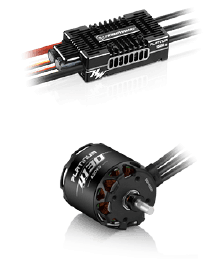
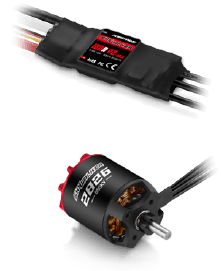
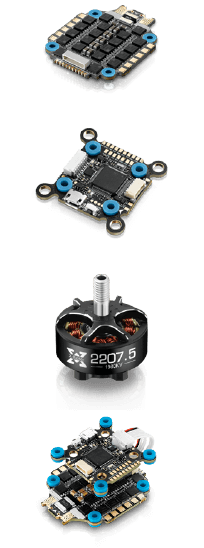
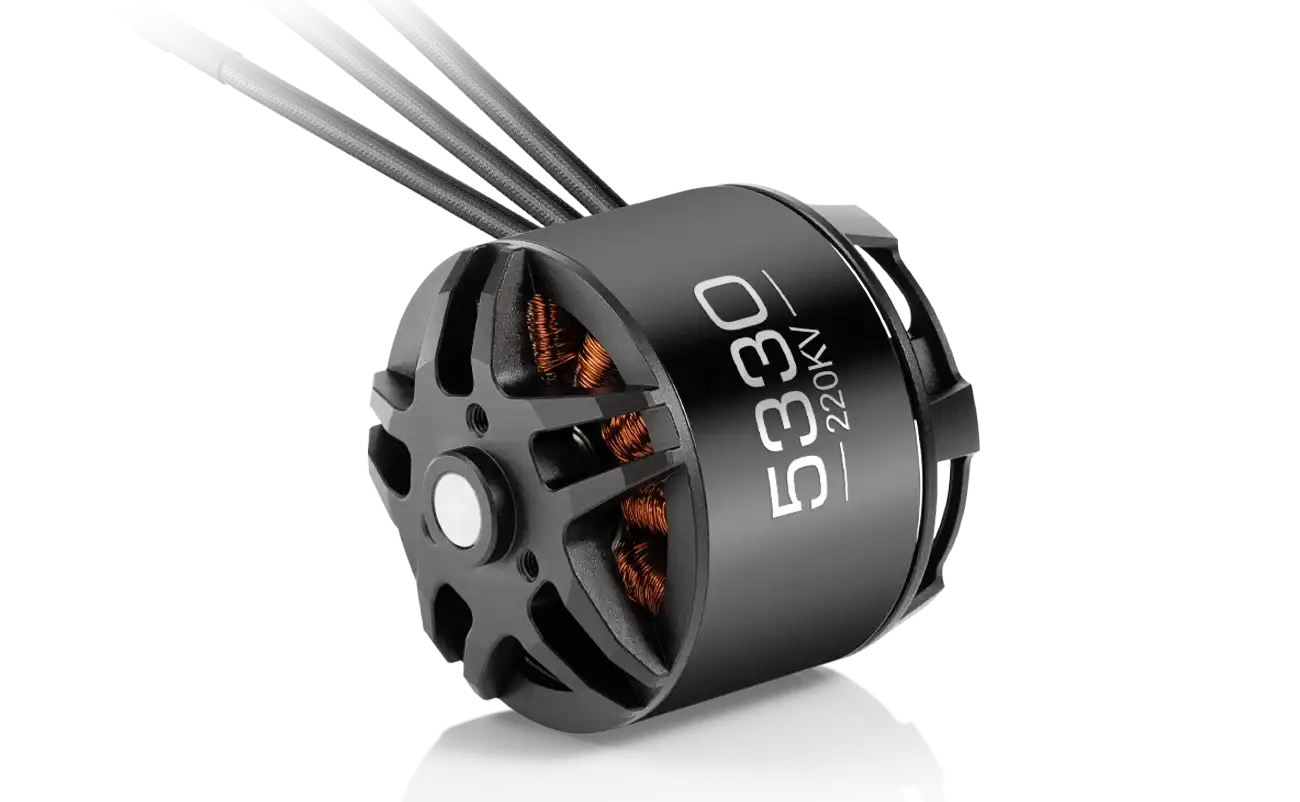




MULTIROTOR


Innovation and Performance for a simplified assembly.
Superior efficiency, exceptional stability.
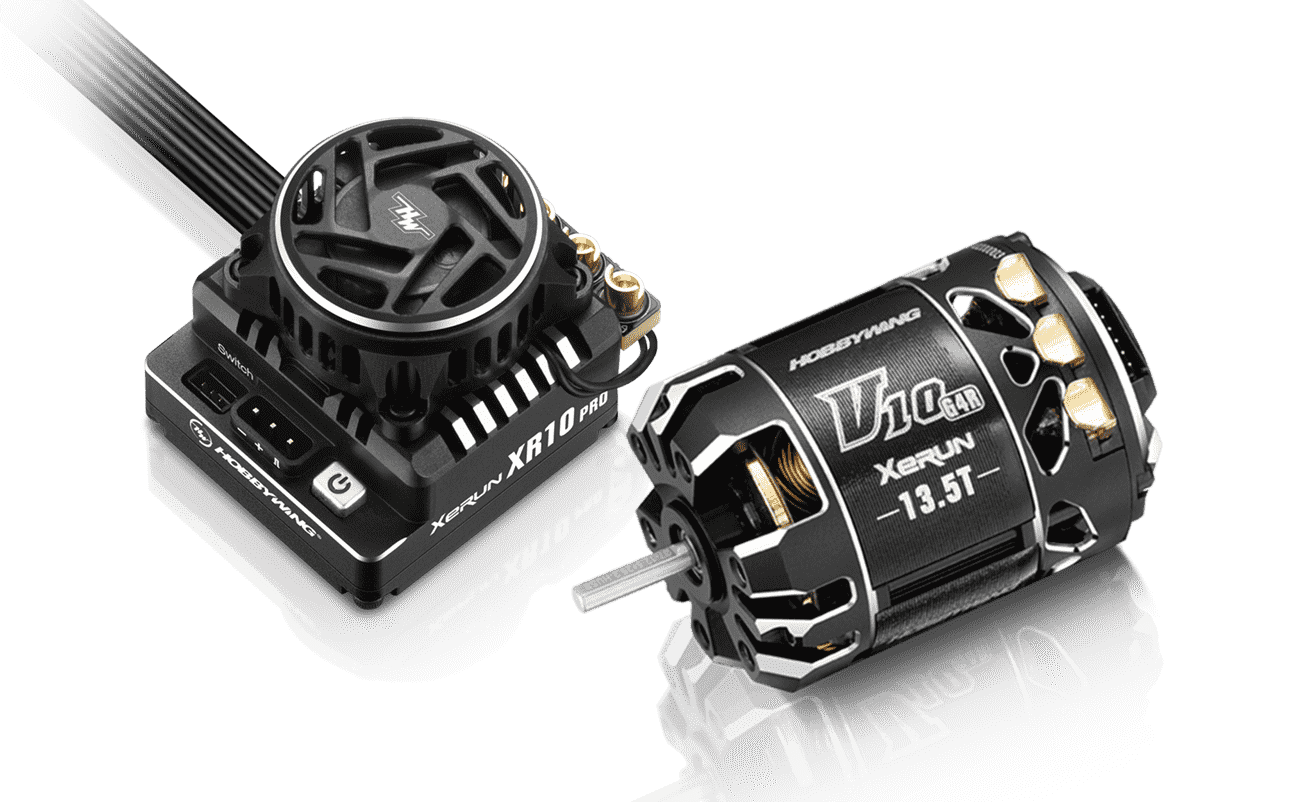
VTOL
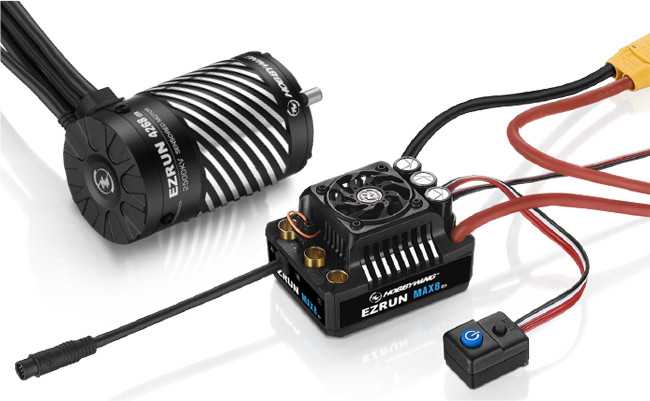
FIXED WING
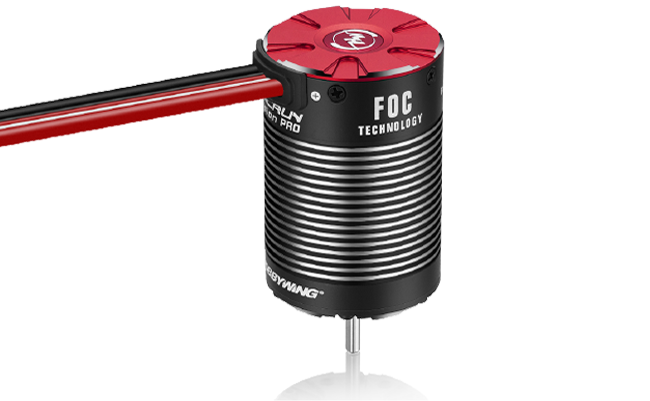
FPV





Source : HOBBYWINGDate : 13th Nov 2026
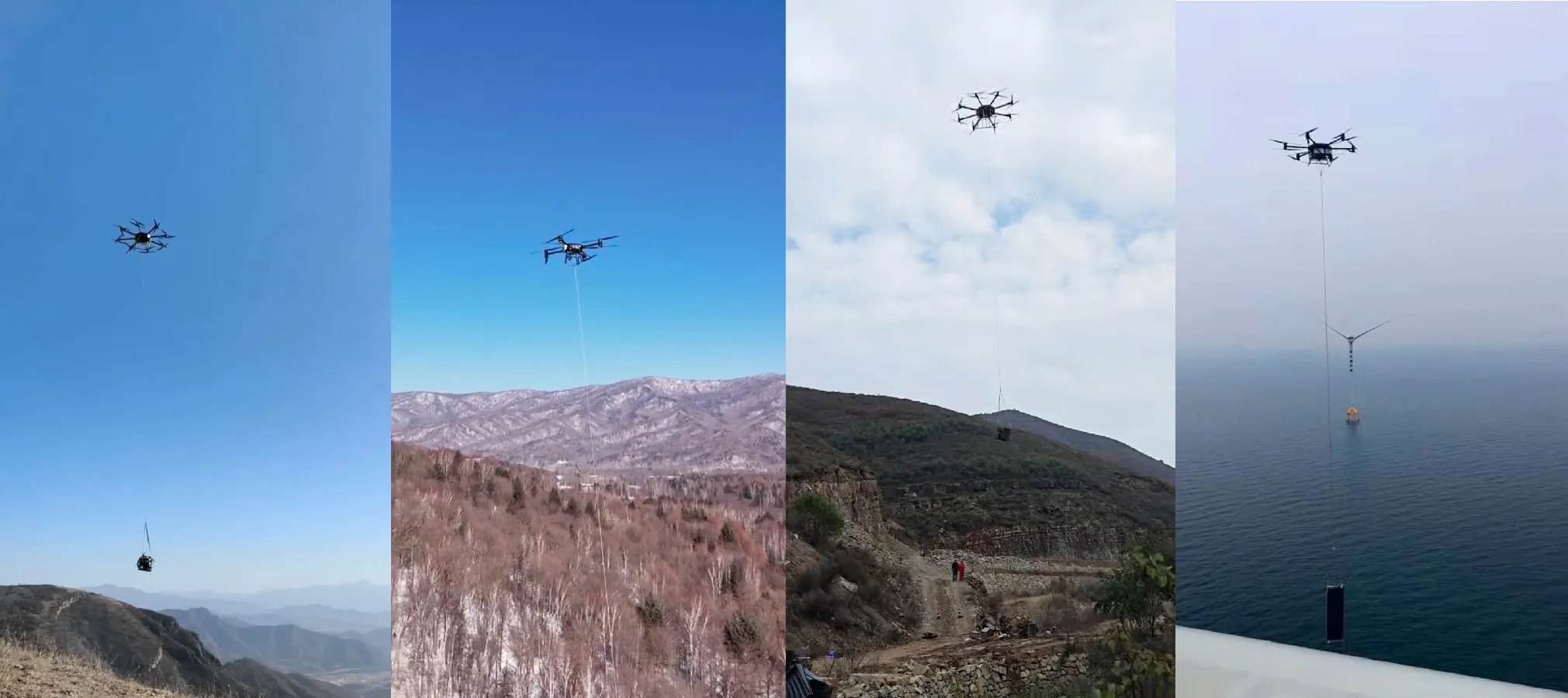
For scenarios including low- altitude logistics, offshore wind farm maintenance, heavy cargo transportation, emergency rescue and large automated drone nest base stations, regular propulsion systems designed for aerial photography or agricultural spraying can hardly meet operational requirements. Many UAV developers keep asking the same question: what kind of motors and power kits are truly suitable for heavy- lift drones?
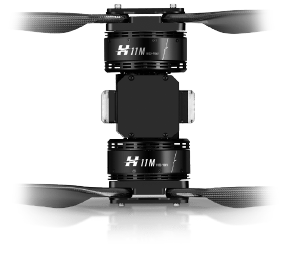
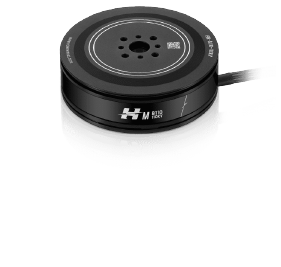
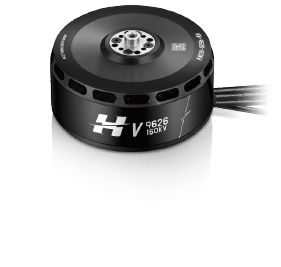
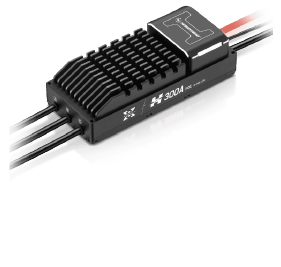
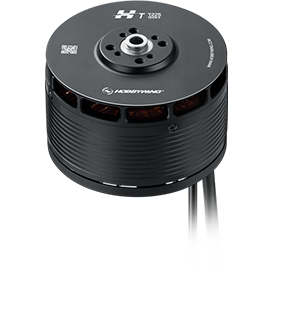
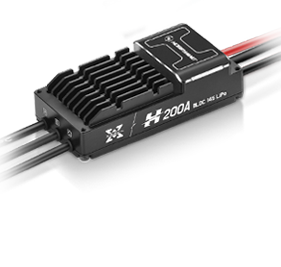
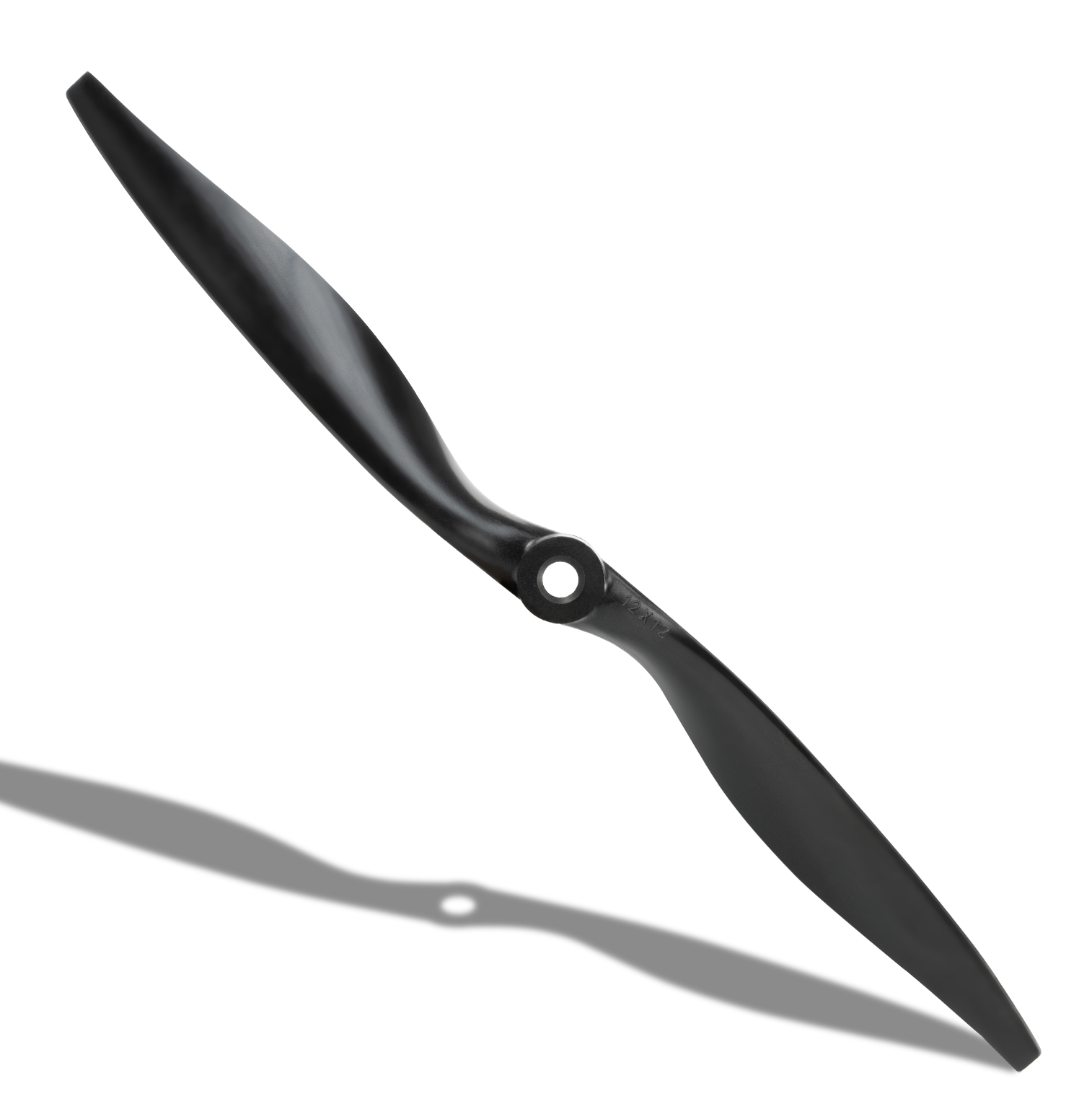
Most people first focus on "how much thrust it can produce". However, years of field operation show that the core competitiveness of heavy- lift drone propulsion is not instantaneous peak thrust. It lies in stable sustained load performance, sufficient power margin, reliability in harsh environments and full- system matching. A qualified heavy- lift power solution is a coordinated system integrating motors, ESCs, propellers, sensing modules and protection logic, rather than just a standalone high- power motor. The Hobbywing H- series coaxial integrated propulsion lineup, covering H11MD, H13MD, H15MD, H15MD Plus and the newly released H15MD- 100, forms a complete heavy- lift power matrix. It supports platforms ranging from medium- heavy payload models to ultra- large platforms with single- axis thrust up to 100 kg class. In this guide, the term propulsion system refers to an integrated motor and ESC power kit for heavy- lift multirotor drones. The Hobbywing H- series introduced below uses a coaxial design.
Lightweight drone propulsion prioritizes light weight and agility. For heavy- lift platforms such as 4- axis 8- prop, 6- axis 12- prop and 8- axis 16- prop configurations (MTOW from 420–840 kg, payload capacity 200–500 kg), the design logic is completely different: Optimized for sustained hover missions: Heavy- lift drones spend most flight time on stable hovering and low- speed precision lifting. The motor must deliver consistent output at 50%- 70% throttle, instead of relying on short- term burst thrust. Reliable temperature rise control directly determines whether all- day operations are feasible offshore, in high- temperature or high- plateau regions. The H15MD series features optimized thermal design for long- duration heavy hovering, with large air outlets and centrifugal fans to boost cooling efficiency and stabilize output under continuous load.
Sufficient power margin for turbulent airflow: Gusts are common in offshore and mountainous operation zones. Adequate thrust reserve keeps attitude stable under sudden wind disturbances, a capability rarely seen on lightweight consumer propulsion systems.
Complete fault monitoring and traceability: Built- in Black Box Fault Storage captures and records full- link operational data from the power system in real time, and supports CAN bus log reading. Once an abnormality occurs, rapid diagnosis and data traceability help cut costs for flight testing and fleet maintenance of heavy- lift projects. Fault storage is standard across H11MD, H13MD and H15MD for post- flight condition review by R&D and maintenance teams.
Compatible with unattended auto- nest workflows: For routine operations with auto nests, vehicle- mounted platforms and smart base stations, the optional Intelligent Propeller Control (IPC) with magnetic encoder positioning solution is available. After RTL homing, it achieves precise propeller orientation to avoid propeller interference and supports fully automatic takeoff, landing and battery swap.
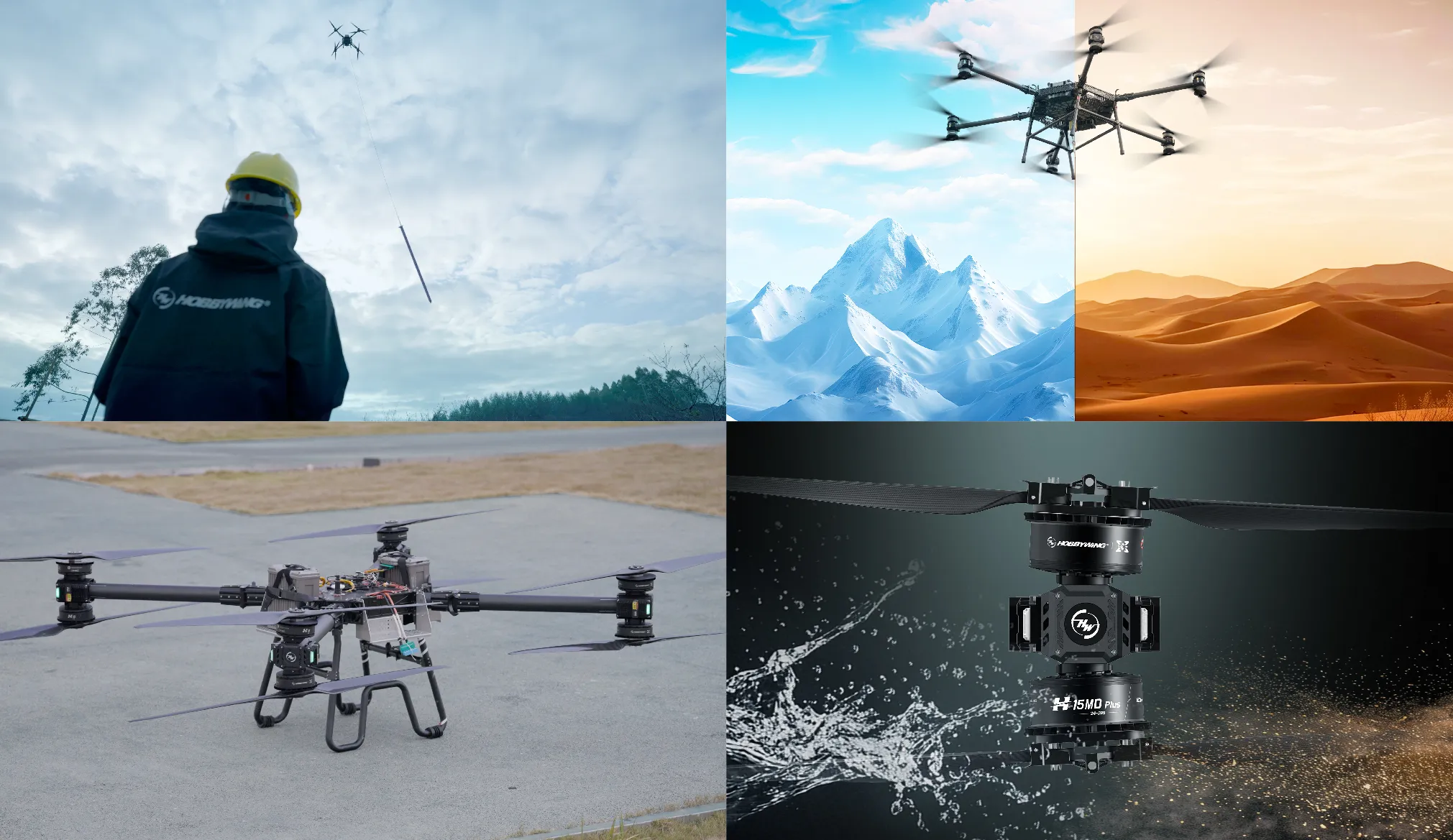
Comprehensive protection for harsh environments: Offshore salt spray, strong seasonal coastal wind, dust and wide temperature fluctuation demand robust protection for motors and ESCs. Multi- layer hardware & software safeguards cover overcurrent, stall, overtemperature, undervoltage, overvoltage, phase loss and throttle signal loss, instead of simple dust and water resistance from a sealed housing only.
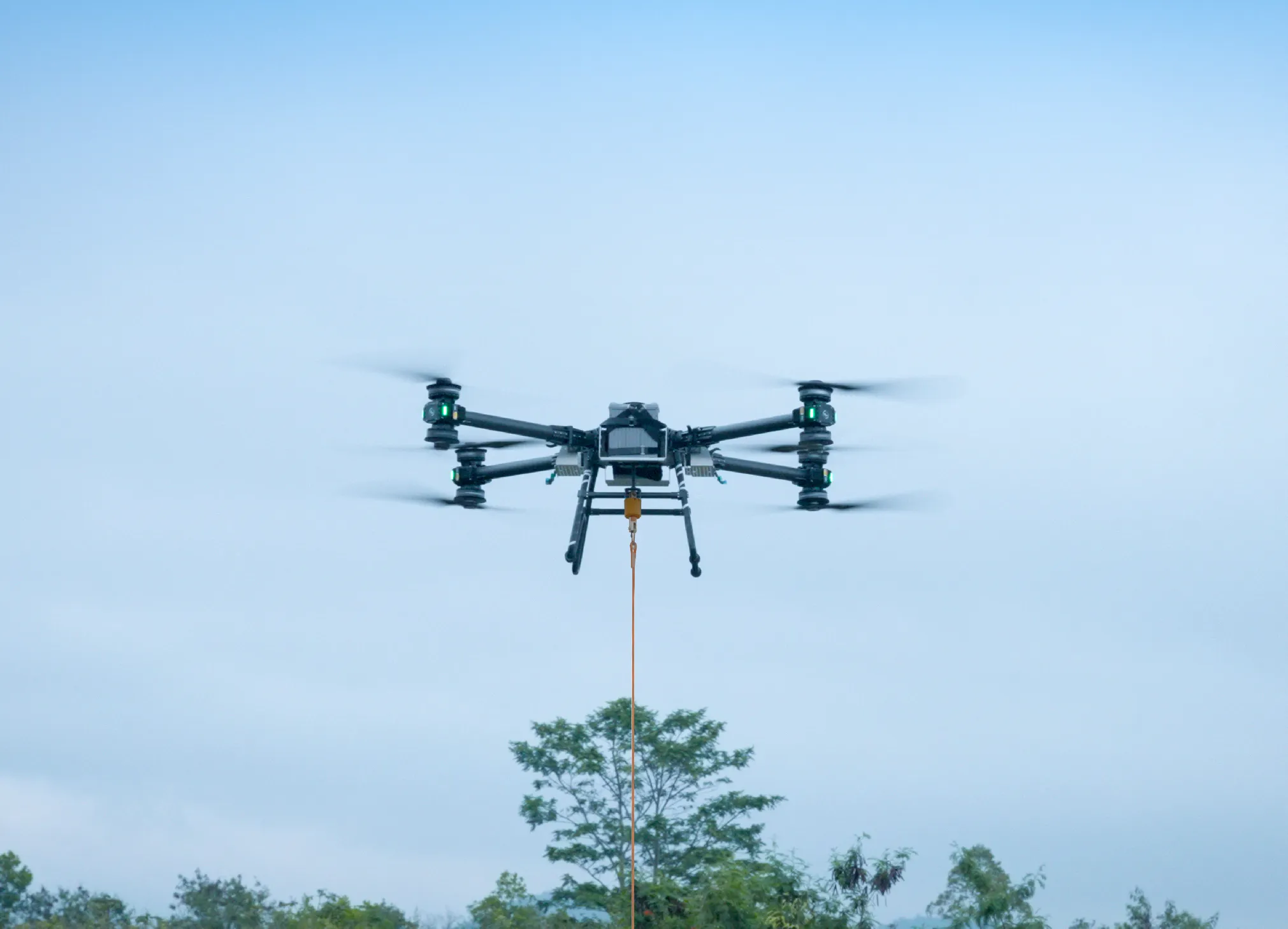
Pitfall 1: Higher thrust is always better, peak thrust is the priority Peak thrust only represents short- term limit capacity. If the motor delivers high burst power without adequate cooling, continuous hovering will trigger rapid temperature rise, thrust attenuation and power reduction protection, which may force the lifting mission to abort mid- flight. When selecting propulsion, rated sustained thrust and thermal curves carry higher priority than advertised peak figures. The new H15MD- 100 delivers a recommended single- axis takeoff thrust of 95–105 kg; the rated operating point should be the key consideration rather than pure peak performance.
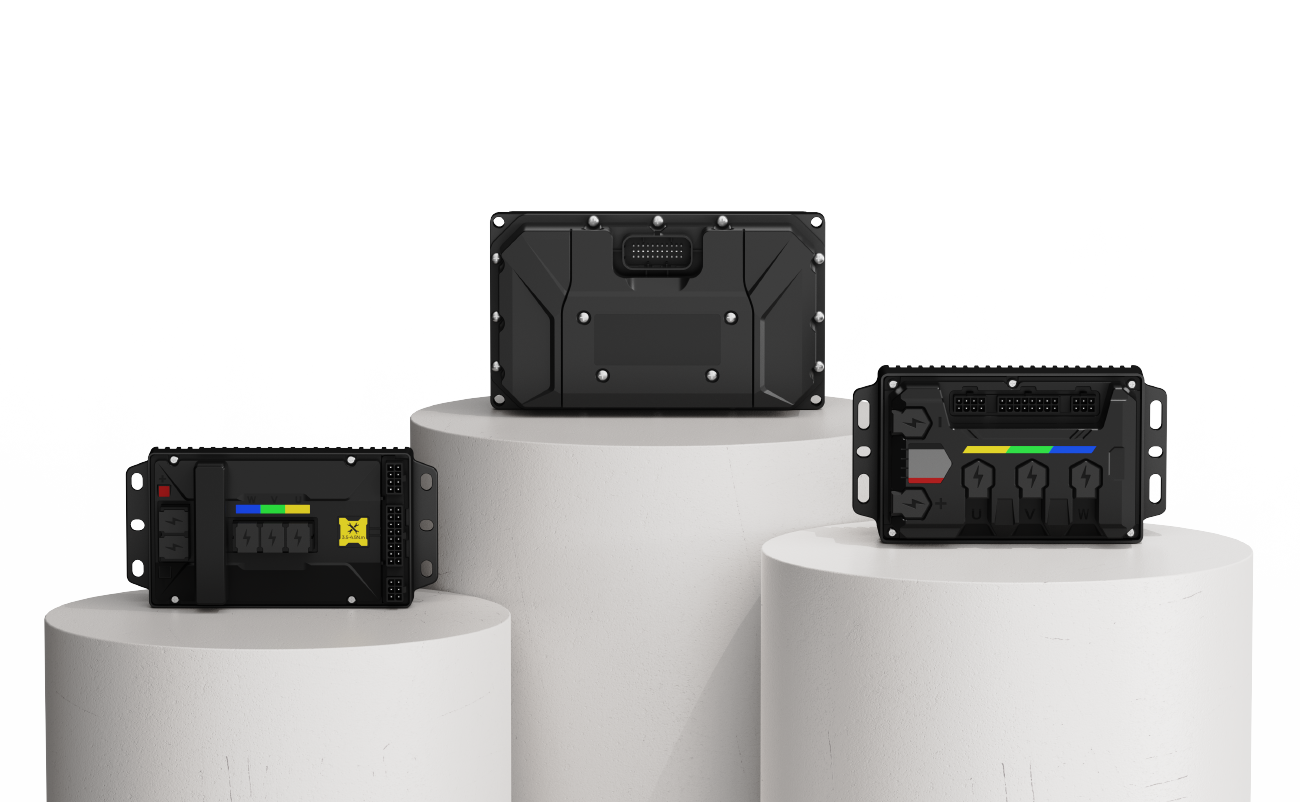
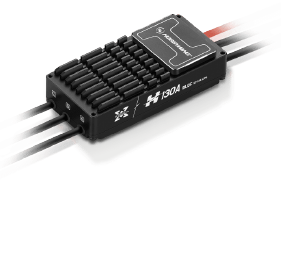
Pitfall 2: Pair any high- power motor with generic ESCs Under high- current, high- voltage heavy- load conditions, motor KV value, inductance, ESC driving algorithm and prop load curve must be well matched. Mismatched combinations may cause current oscillation, MOSFET short circuit and phase loss. Even if a single motor has excellent standalone parameters, the whole system remains unstable. All models from H11MD to H15MD are factory- integrated coaxial motor & ESC assemblies, validated via bench tests and real heavy- load flight trials, eliminating extra matching work for developers.
Pitfall 3: Only rely on static ground tests and ignore wind field & high- altitude conditions Thrust drops noticeably at offshore wind sites with strong wind or high- altitude areas with low air density, even with the same throttle setting. Coastal sites such as Weihai have narrow operational windows in windy seasons, requiring high anti- wind margin and steady torque output. Many power systems pass static ground tests but fail to meet the designed payload requirement under offshore strong wind.
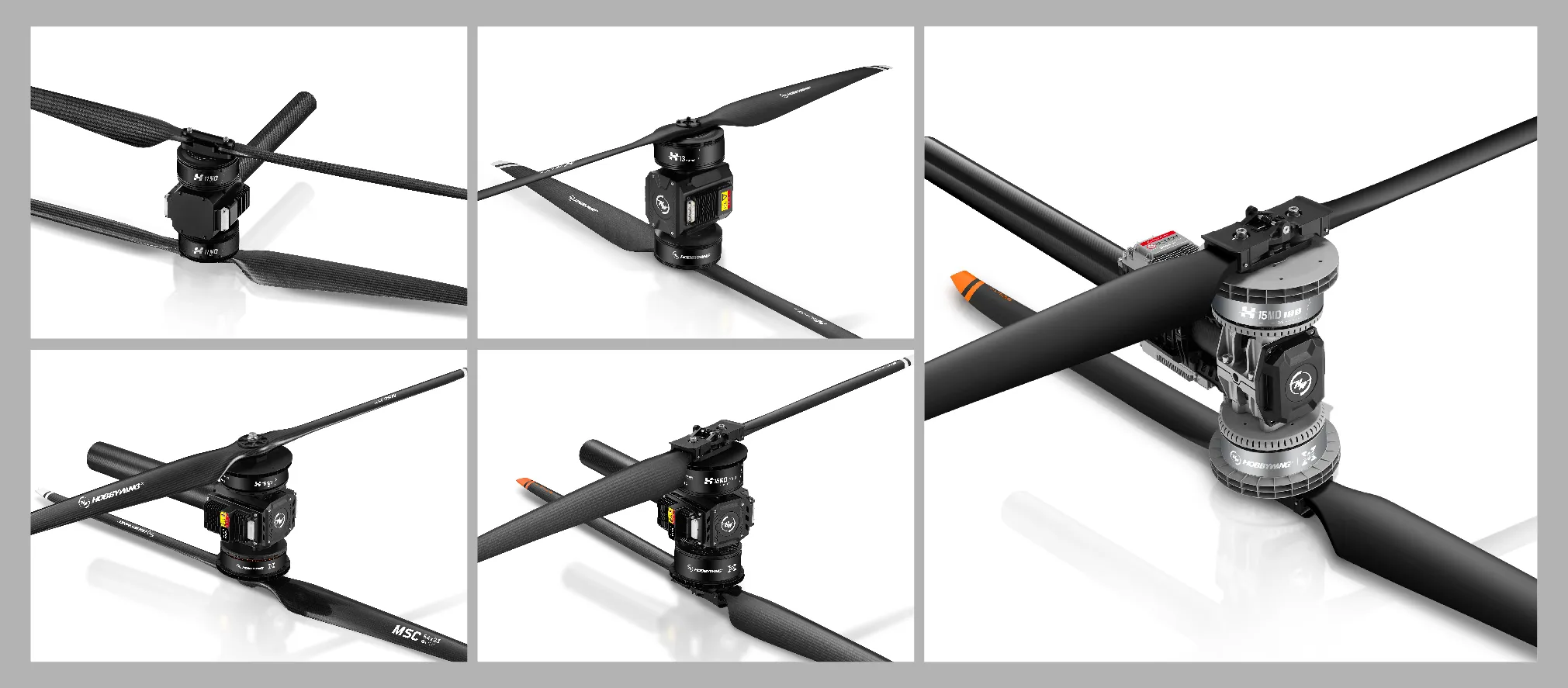
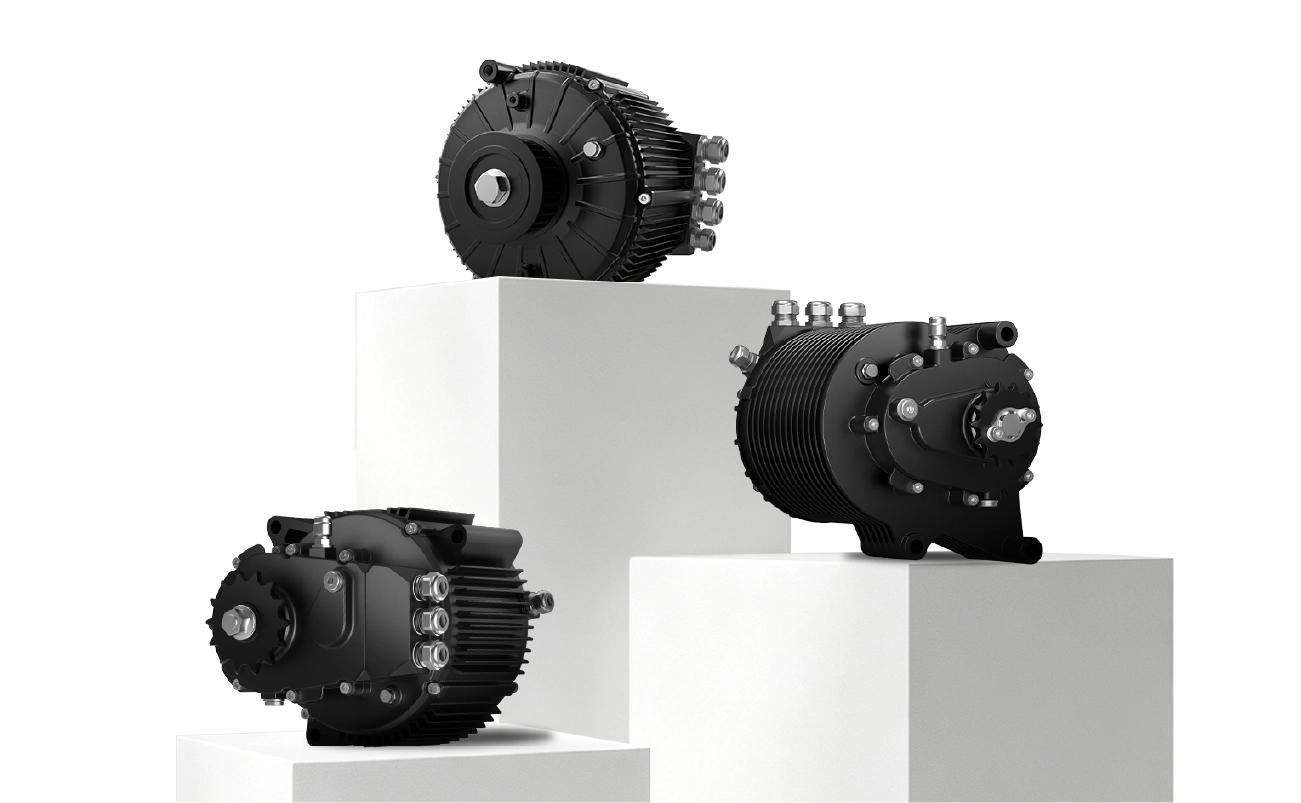
The H- series coaxial propulsion covers a wide thrust spectrum: H11MD: 25–28 kg per axis for mid- size heavy- lift airframes H13MD: 45 kg per axis for medium heavy payload lifting H15MD: 60 kg per axis H15MD Plus: 80 kg per axis New H15MD- 100: 95–105 kg per axis for ultra- large heavy- lift platforms They are compatible with 4- axis 8- prop, 6- axis 12- prop and 8- axis 16- prop multirotor frames, supporting payloads from 50 kg up to 500 kg. Typical use cases:
Offshore wind farm maintenance: lifting radiators, tools and spare parts
Low- altitude heavy cargo delivery, mountain supply dropping, emergency material delivery
High- altitude cargo transport and emergency rescue
Heavy industrial construction and site material transportation
Unattended heavy inspection fleets with auto nests and vehicle- mounted stations
The power system supports HW CAN, droneCAN and other CAN protocols, establishing data links between ground station, flight controller and propulsion unit. It enables real- time remote status monitoring of every power channel. Combined with 24- hour log storage, remote maintenance and large- scale fleet management are achievable.
An ideal heavy- lift drone motor and power kit can be defined in one sentence: an integrated propulsion system with sufficient rated sustained thrust, reliable thermal management, generous power margin, full- range protection and data traceability, and native compatibility for future unattended auto- nest operations.
It is far more than a high- power brushless motor. It is a complete propulsion ecosystem integrating hardware protection, real- time monitoring, log recording and over- temperature alarm, plus IPC intelligent propeller control for automated docking workflows. The full H- series portfolio spanning H11MD to H15MD- 100 provides off- the- shelf propulsion choices for heavy- lift airframes of different MTOW and payload specifications, engineered for high- value, high- risk industrial heavy- lift missions.
If you are developing heavy- lift UAV airframes or working on project feasibility studies, our engineering team can deliver custom propulsion matching proposals based on your frame layout, maximum takeoff weight, target payload and operating environment.
Source:HOBBYWINGDate: 13th Nov 2026
For scenarios including low- altitude logistics, offshore wind farm maintenance, heavy cargo transportation, emergency rescue and large automated drone nest base stations, regular propulsion systems designed for aerial photography or agricultural spraying can hardly meet operational requirements. Many UAV developers keep asking the same question: what kind of motors and power kits are truly suitable for heavy- lift drones?
Most people first focus on "how much thrust it can produce". However, years of field operation show that the core competitiveness of heavy- lift drone propulsion is not instantaneous peak thrust. It lies in stable sustained load performance, sufficient power margin, reliability in harsh environments and full- system matching. A qualified heavy- lift power solution is a coordinated system integrating motors, ESCs, propellers, sensing modules and protection logic, rather than just a standalone high- power motor. The Hobbywing H- series coaxial integrated propulsion lineup, covering H11MD, H13MD, H15MD, H15MD Plus and the newly released H15MD- 100, forms a complete heavy- lift power matrix. It supports platforms ranging from medium- heavy payload models to ultra- large platforms with single- axis thrust up to 100 kg class. In this guide, the term propulsion system refers to an integrated motor and ESC power kit for heavy- lift multirotor drones. The Hobbywing H- series introduced below uses a coaxial design.
Lightweight drone propulsion prioritizes light weight and agility. For heavy- lift platforms such as 4- axis 8- prop, 6- axis 12- prop and 8- axis 16- prop configurations (MTOW from 420–840 kg, payload capacity 200–500 kg), the design logic is completely different: Optimized for sustained hover missions: Heavy- lift drones spend most flight time on stable hovering and low- speed precision lifting. The motor must deliver consistent output at 50%- 70% throttle, instead of relying on short- term burst thrust. Reliable temperature rise control directly determines whether all- day operations are feasible offshore, in high- temperature or high- plateau regions. The H15MD series features optimized thermal design for long- duration heavy hovering, with large air outlets and centrifugal fans to boost cooling efficiency and stabilize output under continuous load.
Sufficient power margin for turbulent airflow: Gusts are common in offshore and mountainous operation zones. Adequate thrust reserve keeps attitude stable under sudden wind disturbances, a capability rarely seen on lightweight consumer propulsion systems.
Complete fault monitoring and traceability: Built- in Black Box Fault Storage captures and records full- link operational data from the power system in real time, and supports CAN bus log reading. Once an abnormality occurs, rapid diagnosis and data traceability help cut costs for flight testing and fleet maintenance of heavy- lift projects. Fault storage is standard across H11MD, H13MD and H15MD for post- flight condition review by R&D and maintenance teams.
Compatible with unattended auto- nest workflows: For routine operations with auto nests, vehicle- mounted platforms and smart base stations, the optional Intelligent Propeller Control (IPC) with magnetic encoder positioning solution is available. After RTL homing, it achieves precise propeller orientation to avoid propeller interference and supports fully automatic takeoff, landing and battery swap.
Comprehensive protection for harsh environments: Offshore salt spray, strong seasonal coastal wind, dust and wide temperature fluctuation demand robust protection for motors and ESCs. Multi- layer hardware & software safeguards cover overcurrent, stall, overtemperature, undervoltage, overvoltage, phase loss and throttle signal loss, instead of simple dust and water resistance from a sealed housing only.
Pitfall 1: Higher thrust is always better, peak thrust is the priority Peak thrust only represents short- term limit capacity. If the motor delivers high burst power without adequate cooling, continuous hovering will trigger rapid temperature rise, thrust attenuation and power reduction protection, which may force the lifting mission to abort mid- flight. When selecting propulsion, rated sustained thrust and thermal curves carry higher priority than advertised peak figures. The new H15MD- 100 delivers a recommended single- axis takeoff thrust of 95–105 kg; the rated operating point should be the key consideration rather than pure peak performance.
Pitfall 2: Pair any high- power motor with generic ESCs Under high- current, high- voltage heavy- load conditions, motor KV value, inductance, ESC driving algorithm and prop load curve must be well matched. Mismatched combinations may cause current oscillation, MOSFET short circuit and phase loss. Even if a single motor has excellent standalone parameters, the whole system remains unstable. All models from H11MD to H15MD are factory- integrated coaxial motor & ESC assemblies, validated via bench tests and real heavy- load flight trials, eliminating extra matching work for developers.
Pitfall 3: Only rely on static ground tests and ignore wind field & high- altitude conditions Thrust drops noticeably at offshore wind sites with strong wind or high- altitude areas with low air density, even with the same throttle setting. Coastal sites such as Weihai have narrow operational windows in windy seasons, requiring high anti- wind margin and steady torque output. Many power systems pass static ground tests but fail to meet the designed payload requirement under offshore strong wind.
The H- series coaxial propulsion covers a wide thrust spectrum: H11MD: 25–28 kg per axis for mid- size heavy- lift airframes H13MD: 45 kg per axis for medium heavy payload lifting H15MD: 60 kg per axis H15MD Plus: 80 kg per axis New H15MD- 100: 95–105 kg per axis for ultra- large heavy- lift platforms They are compatible with 4- axis 8- prop, 6- axis 12- prop and 8- axis 16- prop multirotor frames, supporting payloads from 50 kg up to 500 kg. Typical use cases:
Offshore wind farm maintenance: lifting radiators, tools and spare parts
Low- altitude heavy cargo delivery, mountain supply dropping, emergency material delivery
High- altitude cargo transport and emergency rescue
Heavy industrial construction and site material transportation
Unattended heavy inspection fleets with auto nests and vehicle- mounted stations
The power system supports HW CAN, droneCAN and other CAN protocols, establishing data links between ground station, flight controller and propulsion unit. It enables real- time remote status monitoring of every power channel. Combined with 24- hour log storage, remote maintenance and large- scale fleet management are achievable.
An ideal heavy- lift drone motor and power kit can be defined in one sentence: an integrated propulsion system with sufficient rated sustained thrust, reliable thermal management, generous power margin, full- range protection and data traceability, and native compatibility for future unattended auto- nest operations.
It is far more than a high- power brushless motor. It is a complete propulsion ecosystem integrating hardware protection, real- time monitoring, log recording and over- temperature alarm, plus IPC intelligent propeller control for automated docking workflows. The full H- series portfolio spanning H11MD to H15MD- 100 provides off- the- shelf propulsion choices for heavy- lift airframes of different MTOW and payload specifications, engineered for high- value, high- risk industrial heavy- lift missions.
If you are developing heavy- lift UAV airframes or working on project feasibility studies, our engineering team can deliver custom propulsion matching proposals based on your frame layout, maximum takeoff weight, target payload and operating environment.